
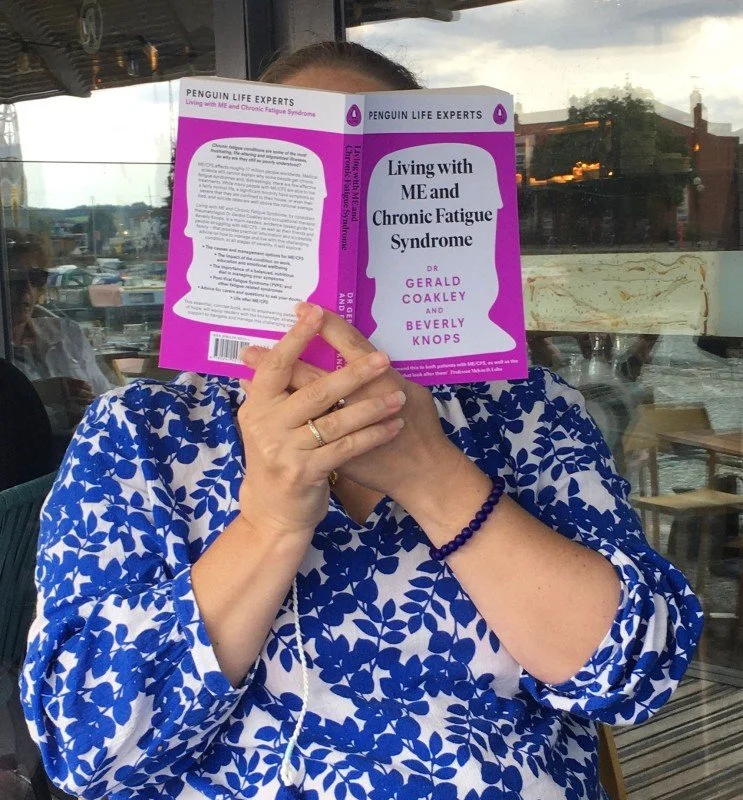
Reading our Managing Directors book on publication
As part of our 15th birthday celebrations, I thought I would have a ponder about what I have learnt about ME/CFS in the time I have been working here, as a non-clinician and someone with ME/CFS myself. It has certainly been very informative to be employed to support our excellent, very experienced team of multidisciplinary clinicians and being immersed in this world, so to speak.
It matters in this community whether it’s referred to as ME/CFS or CFS/ME, or either term singularly
Language can be misleading, and what matters is how the client describes their experience.
Early intervention is key
A high proportion of people are managing to sustain work with a fatigue condition
After an infection, resting is vital in the acute phase and doing less than normal when well enough to resume activity again is crucial
In order for rehabilitation to be most effective, a clinically trained specialist is important
The importance of low level/impact activity (for example gardening or baking), as an intermediate step between complete rest and full-on activity
That there are different types of rest which are important to consider - cognitive, emotional, social as well as physical
How the nervous system has a significant role to play in the relationship between ME/CFS and rehabilitation
Witnessing one of the effects of the pandemic in the prevalence of long COVID symptoms and their overlap with ME/CFS
Learning that 33% of our caseload are also neurodivergent (autism/ADHD) and how research is catching up with this emerging trend
How powerful it is for people with these conditions to feel fully heard and understood and to receive bespoke intervention designed for their specific symptoms and circumstances.
How congruent Vitality360 is as a working environment in terms of its embedded values - walking the talk, especially regarding flexibility of working patterns
The power of small changes, especially in terms of thoughts/views, and their impact on symptoms
Understanding how the pattern of ‘boom and bust’ is correlated with my particular temperament and lifestyle