
For 15 years, Vitality360 has provided rehabilitation support for people whose lives have been impacted by persistent symptoms of fatigue and pain. Over this decade and a half, the profile of the clients we treat, and the challenges they face, has changed in remarkable ways.
To mark our 15th anniversary, we sat down with members of our multidisciplinary team; highly experienced clinicians who work both privately and alongside NHS fatigue and pain clinics across the UK, to reflect on how clinical practice, client needs, and rehabilitation have shifted over the last 15 years.
A broader spectrum of diagnoses
Fifteen years ago, the vast majority of clients seeking support presented primarily with ME/CFS (Myalgic Encephalomyelitis / Chronic Fatigue Syndrome). Today, while ME/CFS remains a core area of our work, the diagnostic landscape has broadened significantly.
"15 years ago, a higher proportion of our clients had ME/CFS. The variation in diagnoses has broadened with time, with increased numbers of clients with persistent pain and fatigue-related diagnoses with various causes."
-Emily Tims, Specialist Physiotherapist
Clients now come to Vitality360 with fatigue and pain arising from a wide variety of underlying health conditions, including post-cancer fatigue, Multiple Sclerosis (MS), traumatic brain injury (TBI), stroke, Functional Neurological Disorder (FND), rheumatological conditions, and Joint Hypermobility Syndrome / hEDS. We are also seeing a noticeable increase in clients presenting with Postural Orthostatic Tachycardia Syndrome (PoTS) or PoTS-like autonomic symptoms.
The impact of Long Covid and post-viral illness
The COVID-19 pandemic marked a major watershed moment in fatigue rehabilitation. Beginning in 2020, clinics worldwide saw a sharp rise in individuals struggling with Long Covid and post-viral illness.
"The pandemic was a major turning point: COVID brought a whole new diagnostic group with Long Covid and post-viral fatigue, and this added a layer of complexity we hadn’t encountered before."
-Charlie Adler, Specialist Occupational Therapist
While the initial influx of Long Covid referrals peaked between 2020 and 2023, the lasting impact on public and clinical awareness has been profound.
As Beverly Knops, Managing Director at Vitality360, reflects:
"For me, the major shift came as a result of the pandemic, when the reality of experiencing debilitating fatigue and associated post-viral symptoms became a matter of universal conversation. What followed was a much deeper, more widespread understanding of fatigue, recognising it as something entirely distinct from everyday tiredness that has a profound impact on people's lives."
The intersection of neurodiversity, pain, and fatigue
Perhaps the most significant clinical shift over the past four to five years has been the growing recognition of how neurodiversity interacts with persistent pain and fatigue.
A substantial proportion of our caseload now includes clients who have a confirmed or suspected diagnosis of ADHD or Autism.
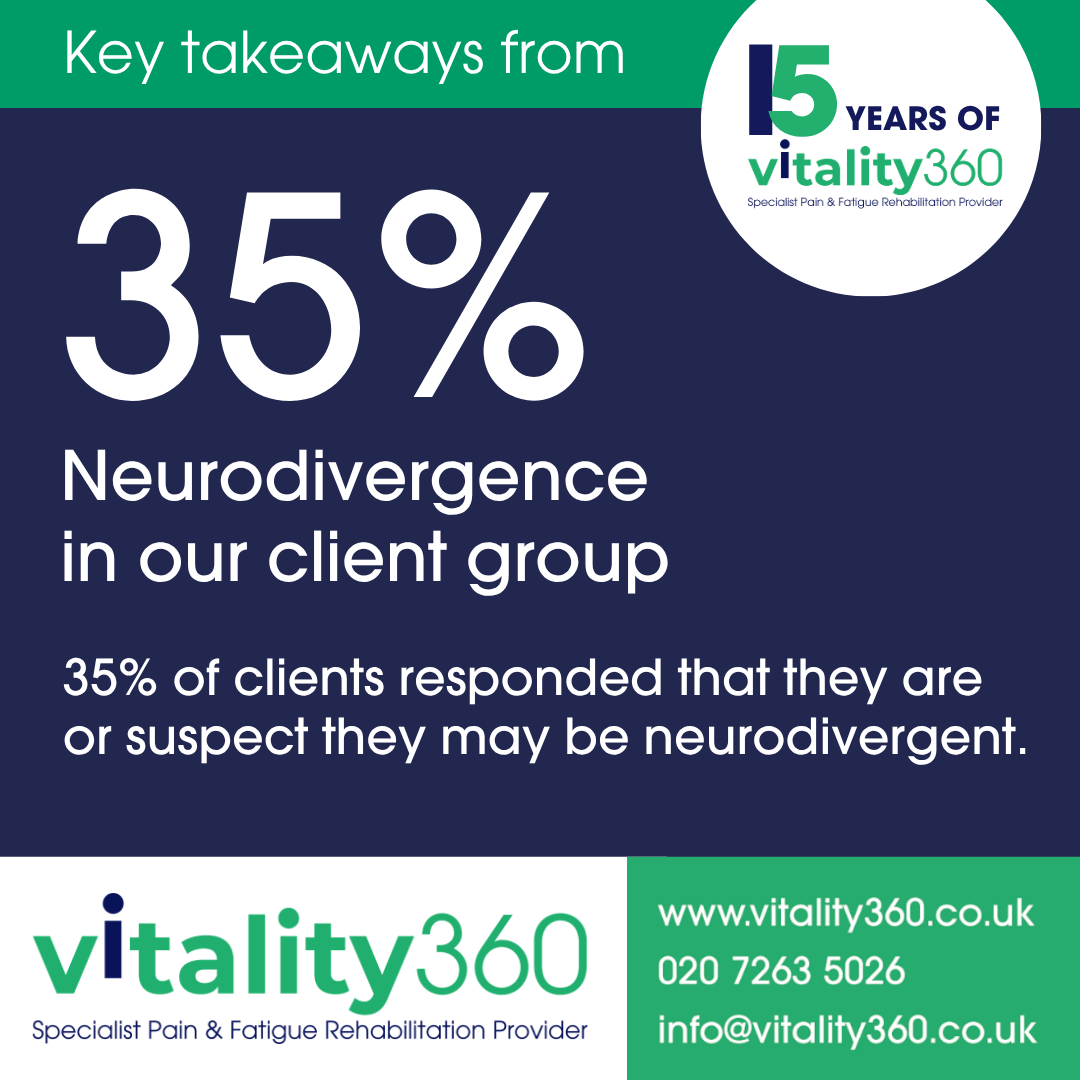
Overlapping presentations: Neurodivergent nervous systems often experience sensory overload, executive functioning challenges, and chronic burnout, which interact directly with physical symptoms of fatigue and pain.
Vocational impact: Our Career and Employment Consultant, Amanda Mason, notes that many clients accessing our Access to Work-funded Disability Impact Training are neurodivergent while managing persistent pain and fatigue conditions.
Recognising neurodivergence allows our team to tailor pacing, communication, and energy-management strategies so rehabilitation works with a client’s neurotype, not against it.
Evidence-based nutrition: moving away from restrictive diets
Nutritional management in chronic illness has shifted in welcome ways over the last 15 years.
Historically, individuals with ME/CFS and persistent fatigue were often directed toward highly restrictive regimens, such as the anti-candida diet, to manage gut symptoms, despite a lack of clinical evidence supporting them.
"In 15 years, diet trends in ME/CFS have changed, although the core recommendations remain the same. This reflects a lack of real progress in understanding what is causing ME symptoms."
-Sue & Ruth, Specialist Dietitian & Specialist Occupational Therapist
Today, advances in understanding fermentable sugars (FODMAPs) and the gut microbiome offer structured, evidence-based options. Modern clinical nutrition focuses on targeted strategies that support gut health without subjecting clients to unnecessary physical, emotional, or financial strain.
Technology in healthcare: accessibility vs. human connection
The way care is delivered has changed fundamentally over the last 15 years. Remote consultations, digital tracking tools, and telehealth platforms have opened doors that were previously closed to many severely ill individuals.
"The role of technology in healthcare has hugely changed in the last 15 years. At Vitality360 we can work remotely, which enables us to access people with long-term disabling conditions from their home, making rehabilitation more accessible."
-Maxine Haylock, Specialist Occupational Therapist
However, technology is a tool, not a replacement for clinical expertise:
"Technology has brought support but also challenges in healthcare... clients are taking more responsibility for how they want their support to look, but they still need the personalised human support that technology can't provide. Technology can facilitate rehabilitation, but not replace the specialist rehabilitation professional."
Looking ahead to the next 15 years
As persistent fatigue and pain become increasingly recognised across a wider spectrum of conditions, the need for flexible, multidisciplinary care is clearer than ever.
As Beverly Knops summarises:
"This growing visibility of an invisible symptom has resulted in a much greater variety of people coming to Vitality360 for support, many of whom present with multiple diagnoses. As our understanding of fatigue continues to evolve, the maturity of our multidisciplinary team places us exceptionally well to support this population and help them optimise their lives."
We are deeply grateful to all the clients, clinicians, and partner organisations who have been part of our journey over the last 15 years. We look forward to continuing to listen, adapt, and advocate for individualised rehabilitation in the years ahead.