Moving beyond survival mode: supporting people to live well with fatigue and Autism/ADHD
We recently held two online webinars as part of the National Autistic Society's Autism Awareness Month, and we were delighted that 150 people booked. Our sessions bridged the gap between neurodiversity and chronic illness, focusing on two vital perspectives:
The Lived Experience: We explored the unique journey of receiving an Autism diagnosis later in life while already managing ME/CFS. We delved into what current research says about the intersection of fatigue and neurodivergence, and how our specific programmes offer tailored support.
Professional Insights: We also hosted a dedicated session for fatigue management professionals, providing them with the tools and clinical understanding needed to support clients navigating both conditions simultaneously.
At Vitality360, we specialise in providing evidence-based rehabilitation for individuals navigating the complexities of fatigue. We recognise that for those with a suspected or confirmed neurodivergence diagnosis (Autism, ADHD, or both), fatigue is rarely "just tiredness." It is often a result of sensory overload, social masking, and the cognitive load of navigating a neurotypical world. Fatigue is the most common and disabling symptom reported by ADHD/Autistic adults, who may be told they are ‘stressed’ or ' not pacing properly’. This group of people has different sensory, cognitive, and regulatory systems, which affect how fatigue manifests. When we start to understand these mechanisms, things starts to make sense.
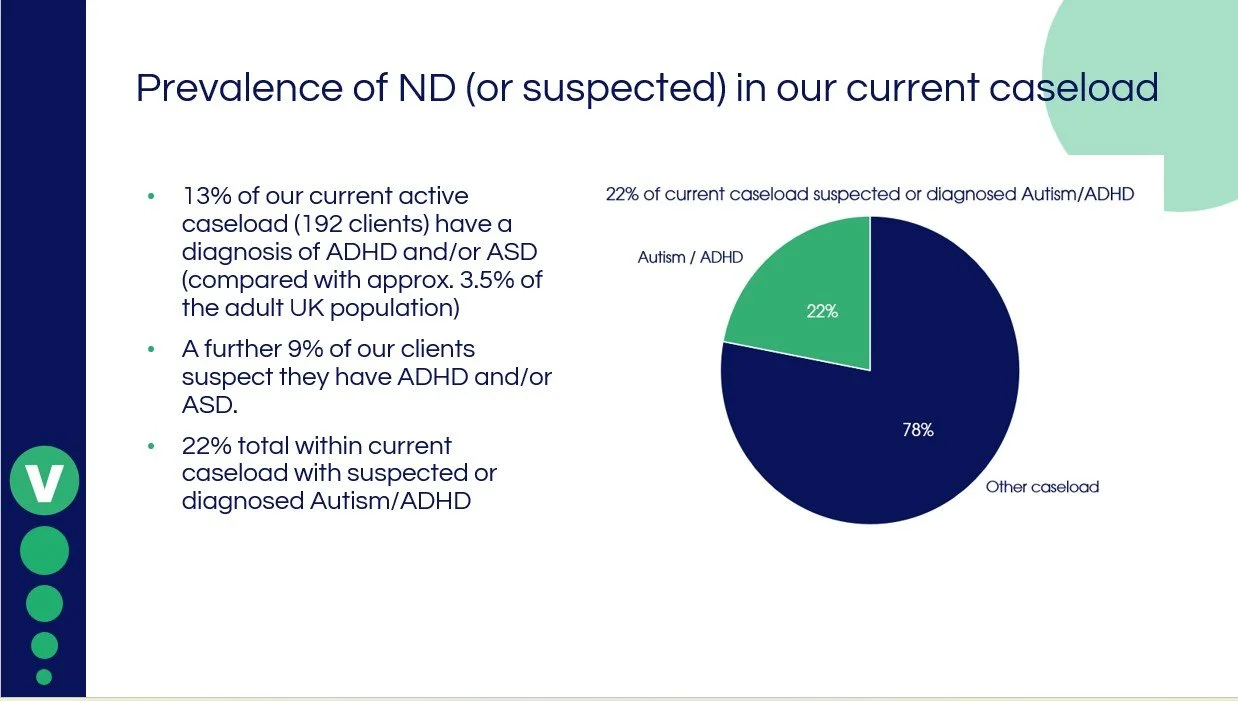
An audit of our current clients found that 13% have a diagnosis of ADHD and/or ASD, compared with approximately 3.5% of the adult UK population.
Understanding the bigger picture
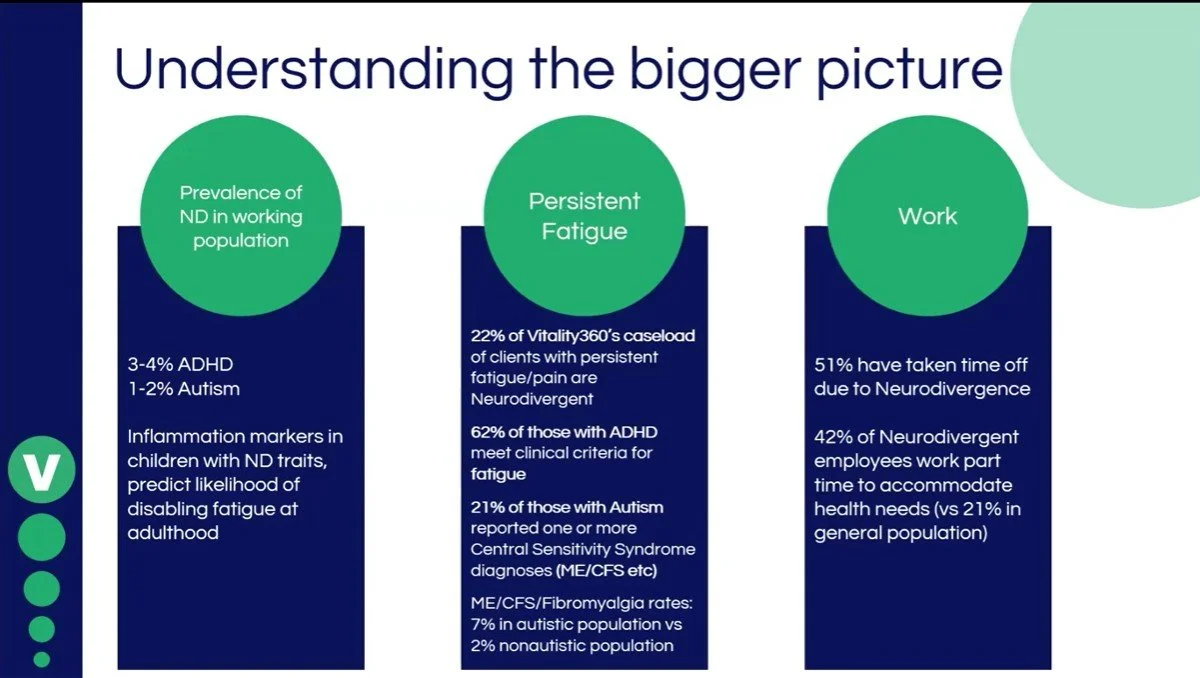
Fatigue isn’t random; it often follows patterns, especially when neurodevelopmental differences are part of the picture. What can look unpredictable from the outside is often linked to how the brain processes information, manages sensory input and copes with ongoing stress.
Even with this complexity, people can make meaningful progress. Our aim is to help you move out of survival mode and find steadier energy through supportive, specialist-led approaches. Understanding neurodivergence can make a real difference, because fatigue is rarely about motivation or simply ‘doing too much’. It’s shaped by things like sensory overload, social effort, constant task-switching, masking, and sometimes not noticing early warning signs. Traditional fatigue advice doesn’t always take these factors into account, which is why we focus on helping people discover ways of doing things that work better for their brains and bodies.
Our Expertise
We offer a unique clinical perspective that blends traditional fatigue management with neuro-affirming practices. Our programmes are designed to support:
Autistic Burnout Recovery: Strategies to manage deep exhaustion and loss of skills.
ADHD Energy Regulation: Helping to balance "hyperfocus" cycles with sustainable rest.
Sensory Modulation: Identifying environmental triggers that deplete your energy.
Executive Functioning Support: Tools to manage the "mental load" that contributes to cognitive fatigue.
Autistic Burnout Recovery
Although Autistic Burnout is not a clinically recognised term, it points to the complexities and issues involved when managing autism and how it can impact fatigue symptoms. We might commonly use the terms ‘tired’, ‘fatigued’ or ‘exhausted’ to describe how we feel; but what is different for someone with Autism is the degree to which this fatigue has an impact, and the speed (like a battery that drains super quickly), compared to those who are neurotypical.
ADHD Energy Regulation
For those with ADHD, being able to ‘hyperfocus’ can be an asset, particularly for accomplishing tasks, and is a skill not everyone has. However, the ‘boom and bust’ pattern that is talked about in fatigue management can be especially prevalent, as hyperfocus can sometimes be followed by a ‘crash’ once the dopamine or adrenaline has been metabolised by the nervous system. Our clinical team helps people recognise their patterns by deep-diving into their particular presentation and establishing an energy baseline within the ADHD profile. Not everyone is the same, so the ability to respond to individual experience is vital. This is also why we don't consider an official diagnosis of Autism or ADHD necessary to be able to benefit from our rehabilitation approach. It’s what matters to the individual experiencing it, and this tailored support is central to our approach.
Appreciating how the nervous system works is also crucial, and one of our clinicians has written extensively about this here. This is a rapidly developing area of research and interest as we learn more through neuroscience.
Our programmes often support people in (re)learning how to rest. We can think that resting is sitting down without actually considering what is happening in our physiology when we do - are we still wired? Are we still thinking about the endless to-do list? Finding practical strategies that support full rest is vital to sustaining daily activities without crashing or, in the worst case, burning out completely and being unable to work, engage in a hobby, or participate in social activities.
Sensory Modulation
Part of having a neurodivergent brain can be a lower (hypo) or higher (hyper) capacity for sensitivity, so that the nervous system is under- or over-stimulated, which can exacerbate fatigue issues. Responses to stimuli will vary depending on other factors such as how well we have slept, for example. It’s useful to understand the nervous system’s limits or ‘window of tolerance’ to environmental triggers, and learn strategies and tools to modulate sensory exposure. Conducting an audit of a work environment can be useful - for example, changing the lighting, or the comfort or position of a chair, can reduce energy demand.
Executive Functioning Support
Swapping between tasks or making decisions can be especially draining for someone with atypical wiring. Even something as simple as choosing a new toothbrush can feel overwhelming when there are dozens of options and the brain is already working hard.. Our programmes help people find ways to manage this executive-function load more smoothly.
How We Support You
Our programmes are flexible and centred around what you need, and you can work with us whether or not you have a formal diagnosis. Our team specialises in persistent pain and fatigue, because these conditions are influenced by. many different parts of life - your body, your thinking, your sensory system, your routines, and your environment. Neurodivergence can add another layer to this, which is why we look at the whole picture with you. Together, we explore what’s driving your fatigue and find practical, sustainable ways to support your energy and wellbeing.
We also offer workplace support through the Access to Work scheme to help people stay in work in a sustainable, manageable way.
Service Features
What to Expect: Personalised Assessment. A deep dive into your unique energy baseline and neurodivergent profile within a holistic understanding.
Pacing Strategies: Practical techniques to manage daily activities without "crashing." Regain control and build sustainable ways of living so that a collaborative approach supports progress.
Environmental Audits: Identifying sensory adjustments for your home or workplace to preserve energy.
Compassionate Coaching: Working with your brain’s natural wiring, not against it.
Why Choose Us?
We believe in adapting the environment and the approach to ensure neurodivergent individuals can thrive. We offer more specialist expertise in fatigue management as award winning fatigue experts.
Diagnosis Not Required: We support those on a waiting list for assessment (suspected) as well as those with confirmed diagnoses.
Neuro-Affirming: Our clinicians stay up to date on the latest research on the neurodivergent experience, and especially around the relationship between neurodiversity and fatigue (for example, see Jessica Eccles’ research here). If you want to see more, do have a look at our ‘
Flexible Delivery: Sessions are available online, taking away energy required to plan for and travel to an appointment in person. Our clients really appreciate the flexibility and conducive environment that online sessions offer.